13.6.13

The time of my life (II)

Waking up, I had to remind myself that we were in Berlin. The constant travel, switching of scenery and sensory overload was thrilling but exhausting. 
I hopped out of bed, woke my roommates and took a shower, ready to greet the day in a fresh new city. As I and the other exchange students breakfasted in the youth hostel, chattering about the day's plans, we took the trouble to look out the window. 
It was raining. 
But exchange students are an indomitable breed, refusing to be cowed even by cold, wet weather at the end of May. Unleashed for an entire day of free time on the city of Berlin, we first made stops to the souvenir shops before heading to some of Berlin's most beautiful attractions. 


Brandenburg Gate


Congress (Reichstag)
We walked and walked, up and down streets and bridges, stopping to nourish ourselves with pizza and chocolate from the Ritter Sport store, where I created my own custom chocolate.
Chilled to the bone but very warm with excitement, we slept very well before waking up the next morning to see an old friend: the sun. 
The day began with a tour of an old bunker in Berlin, where hundreds of people hid for several hours at a time during WWII. The walls glowed with phosphorescent paint; after only an hour underground with subway cars rushing overhead, I was glad to be back outside. 
After so much history, our group was in need of some nourishment. Dropped off in a little square in the city, we immediately went in search of nourishment: pommes (French fries), cookies and Currywurst (sausage with curry sauce). 
The day wasn't over yet: we were issued bicycles and handed over to a tour guide, who led us around the city. Once more we visited the Brandenburg Gate and the house of Angela Merkel (Chancellor of Germany),  the remnants of the Berlin Wall, and Checkpoint Charlie. 


Several of us made a stop at the Holocaust memorial on our way home. 

That evening, our entire group took a massive elevator to the top of the Reichstag, or German Congress. We watched the sun set over the newest city to find a place in our hearts, before heading back to the ground. 
In true Eurotour form, we headed out early the next morning, frantically boarding the bus with our luggage and then sleeping until we arrived at our next destination: Hamburg.


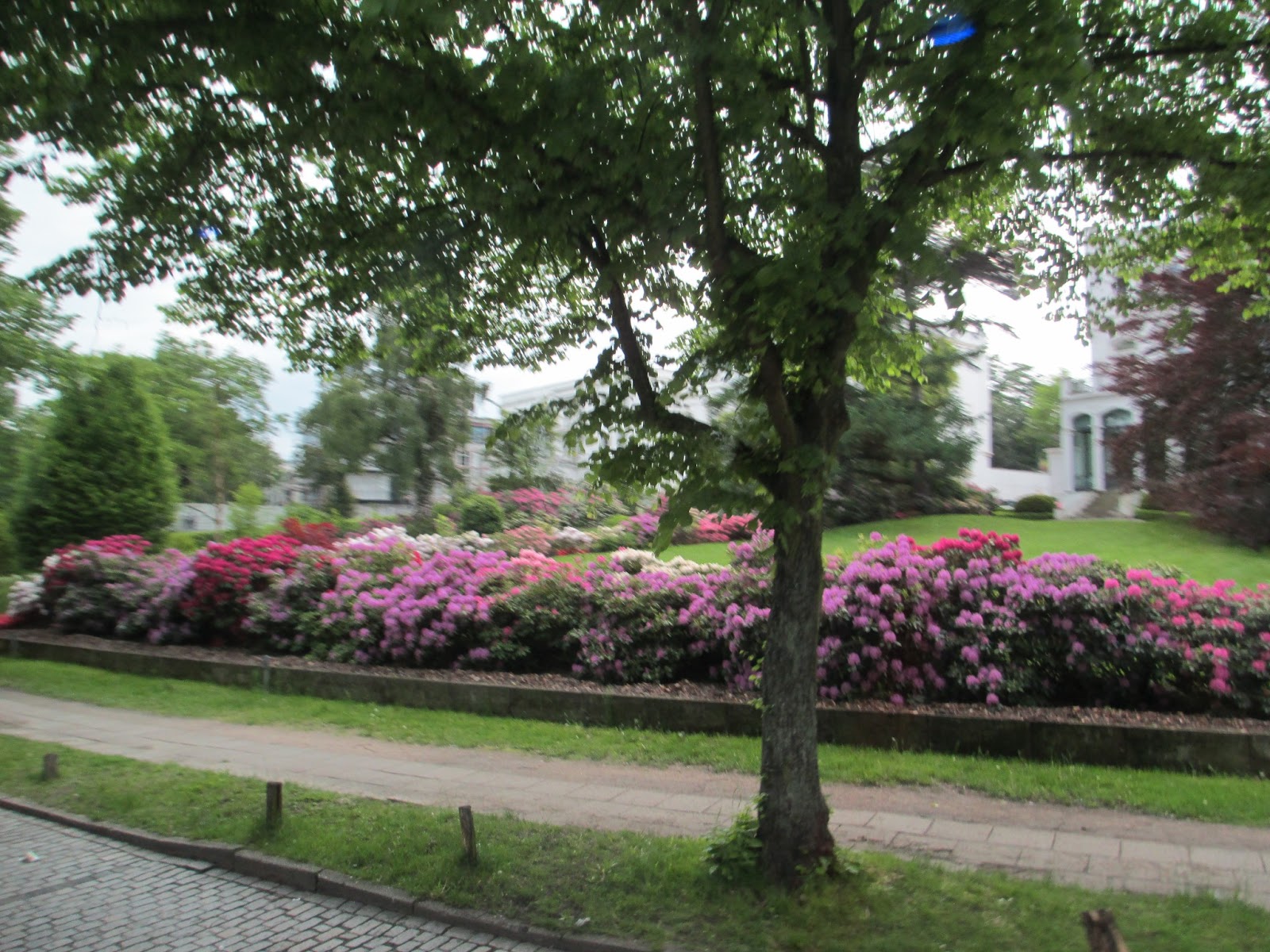
We spent the afternoon on a bus tour, examining the ornate houses and gorgeous gardens, lovely churches and streets. Hamburg, Germany's musical capital, is on a harbor, which meant a boat trip early the next morning, followed by fish for lunch, the necessary souvenir shopping, and an afternoon reveling in the sunshine. Getting a bit lost in a city is one of the best things that can happen to a person; asking locals for directions, seeing back alleys and getting mistaken for a German, and afternoon ice cream made Hamburg one of my favorite places on the tour. 


It's not over yet; stay tuned for the North Sea, Amsterdam and Paris! 

9.6.13

The time of my life (I)

I first heard the magic word 'Eurotour' in a Rotary meeting in the US last July. Immediately, vague visions of roaming through Europe with other exchange students, visiting famous landmarks and eating delicious food, sprung to my mind.
As my exchange began, the promise of the Eurotour remained as a tantalizing hint of what was to come, along with fluency, friends and not missing home all the time. The Eurotour is looked forward to and common for almost all European exchange students. Divided by Rotary district, groups of exchange students and Rotarians travel for several weeks by bus throughout Europe. My parents and I paid the fee, I went on with my exchange, and occasionally a look at my calendar reminded me that I had 18 days at the end of May and beginning of June already booked.
The sun began to shine, and as I spoke fluent German, spent time with friends, and seldom thought about the United States, I remembered the Eurotour. Suddenly, the anticipation that had been simmering since October  jumped to a rolling boil. The German 'Pfingstferien' began, I packed my suitcase full of anything I envisioned myself needing in the next 18 days, debated bringing seven pairs of shoes but ended up with only six, and hopped on a train.
The 29 exchange students from the two Rotary districts of Baden-Württemberg met in Ulm on May 21. After an evening of soccer, music, bad jokes and laughter, we boarded a bus at 8.00 the next morning, driving in the direction of Prague.


The city is very old, full of Czech signs, deliciously grubby alleyways and sandstone bridges. After a six-hour drive, we arrived at our hotel and unpacked before exploring the city in the rain. In the evening, we visited the Karlsbrücke to watch the sunset. The next day we took a city tour, walking through the old city before splitting up for our favorite pastime: buying souvenirs.
Punctually back at the bus at 1pm, we drove away from Prague after less than 24 hours. The entire time was a whirlwind of information, sightseeing and people; I was soon to figure out that the entire tour would be the same way.
On the way to our next stop, we made a detour to the Elbsandsteingebirge, a formation of sandstone overlooking the Elbe River.


After seeing the sun (which we had missed in Prague) we climbed back into the bus, napping all the way to Dresden.
The city of Dresden was greatly destroyed in WWII by the Allies, and since the reunification of Germany great steps have been taken to restore the city, both historically and aesthetically. 


Frauenkirche, completely destroyed and rebuilt with some original stones
In Dresden we also took a city tour, visiting several palaces and churches, and purchased yet more postcards. After two nights in the city, we once again boarded our bus. 
In Weimar, we visited the house of Friedrich Schiller, which is still in perfect condition and filled with original furniture, art and books. 

Our next stop was the concentration camp Buchenwald, open from 1932-45. The camp was mostly destroyed by American troops after the war and was then used as a Soviet prison, but since the reunification has been transformed into a memorial and museum. The tour throughout the grounds was very moving for all of us, and I think a very important stop for us to make on the trip.
We got to Berlin, our next destination, late that evening. It had been a physically and emotionally draining day, but there was still more to come: the European Champions League final, between German teams Borussia Dortmund and FC Bayern-München. Almost all of the exchange students had adopted the German love of the teams and the sport, and we watched the game together with other people in the restaurant. After FC Bayern-München scored the winning goal, we cheered and danced about before falling into bed. 

To hear about more of our trip (Berlin! Hamburg! The North Sea!), check back in the next few days! 


20.5.13

Maying

Once again, the month of May has been good to me. 
So good, in fact, that words aren't really enough. As the sun shines outside and I pack for an 18-day tour of Europe, I leave you with some snaps of my past few weeks. 

Sister Act in Stuttgart; the German equivalent of a Broadway show


Munich street musicians 

Toy museum, Munich
Bavarian State Opera


German spring meal: white asparagus, potatoes and Hollandaise sauce
School symphony orchestra
Schiller-Gymnasium Choir: students, teachers and parents

14.5.13

Current Event Mai

The trial of five people belonging to and supporting a Neo-Nazi cell began last week in Munich, the largest such trial since WWII. The cell, led by Beate Zschäpe, is held responsible for the murders of ten people, including Greeks, Turks and a policewoman. Last Monday was the beginning of the trial, but an adjournment was quickly called for after the impartiality of  judges was questioned.
Emotions are still running high in the city, especially in the courtroom and families of the victims. However, a public commotion was not as high as anticipated, with only one episode, in which women armed with broken bottles demanded entry into the courtroom, requiring police intervention.
Both representatives of Turkish groups and Bavarian government representatives have voiced their disgust for the crimes committed, and their opinions that while Turks and other minority groups belong and are welcomed in Bavaria, these criminals certainly are not.
Citizens of Germany, whether minority groups or not, hope that the trial can solve racial conflicts as well as debates on race and immigration which have been increasing.

http://www.dw.de/emotions-run-high-at-neo-nazi-trial/a-16795324