14.5.12

Holy Heidenheim!

After a very exhausting weekend, "Inbox (1)" was not a very unusual thing to see once I finally sat down to check my email last night.
However, it soon became the best part of my day, when I realized that the email was from a German Rotarian from the small city of Heidenheim, in the south of Germany, to tell me that I would be an exchange student in Heidenheim an der Brenz, to use its full name, which is in Rotary District 1830.
This is where I will be living next year!!!!!!!!
I was informed that there are about 50,000 people in Heidenheim, which is part of Baden-Wurttemberg. It is several hours' drive from Munich, Ulm and Stuttgart.
It's so fantastic to actually have a place to think about! I have been looking at pictures and hope to hear soon about my school and host family.
To read more about the city, click here for the city website, or here for general information.
Here are some of the fruits of my frantic, ecstatic Googling:

Yes, I will be living in a town with a castle. 


12.5.12

Current Event 5/12/12

The Pirate Party, which has been rising to increasing domination all over the country, is predicted to be victorious again during the North Rhine-Westphalia parliamentary elections this weekend. The popularity of the party is also growing, due to other recent victories. Angela Merkel said, "We are taking the Pirates seriously."
Many appreciate the Pirates' attempts at transparency in government and the freshness it brings to the political scene, and supporters are not longer just young "computer nerds," but older people as well. However, some are skeptical that the Pirates may not be able to present feasible policies.
Areas that the Pirates hope to change include education, public transportation and welfare improvements, but the finalization of budgets has proved to be difficult, questioning the Pirates' effectiveness as a reform movement.
The presence of a new and growing political party in Germany could undermine current political power and possibly alter political stability. Unless the Pirates pull a radical act and their support increases dramatically, the threat to the current system will remain small. However, a decrease in support for mainstream political parties could jeopardize policies and missions that are important to increasing stability in the economies and social situations of nations in the EU.

http://www.dw.de/dw/article/0,,15944495,00.html

5.5.12

Current Event 5/5/12

Berlin, while being a vibrant tourist destination as well as a center of culture, attracts many students from all over the globe. However, in addition to diverse cultural exposure, students in Berlin get a good education: Berlin has ranked 8th out of 98 cities all over the world as a top city for students.
For students, Berlin is relatively inexpensive, with rent and other prices low compared to other EU countries. The diversity of both culture and educational opportunities makes it a fun and exciting place to be, and the increasing internationalization makes it an optimal city for students.
However, Berlin is not all fun and games. Some students say that it is hard to make friends as a foreigner, while others remark on the fact that Berlin is a poor city and facilities are run-down. Many continue to say that the "liberal atmosphere" of Berlin makes it a wonderful place to be a student, but the harsh reality of the job market makes it a harder place to live once students graduate.
Olaf Reupke, a coordinator for international students at the Technical University, says that the competitiveness of the German job market eventually causes most students to leave. Because of Berlin's high unemployment rate, students are not expected to receive jobs, and although some remain as interns, most leave the city to pursue opportunities elsewhere.
Berlin's role as a capital means that if it is attractive to students and other foreigners, it will be more prosperous. However, of-the-moment culture will not entice people to stay for long if they do not have jobs. The German job market must be enlarged in order to draw new, younger people to live in the city, expand the economy, and continue to allow culture to flourish.

http://www.dw.de/dw/article/0,,15921795,00.html

27.4.12

Current Event 4/28/12

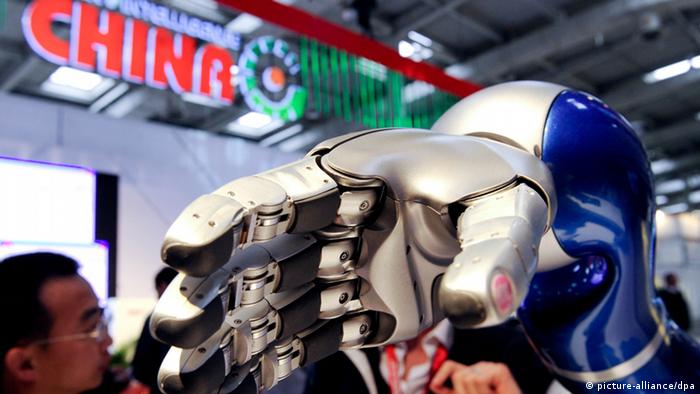
The Hanover Trade Fair this year will see some of the world's finest in trade and industry come together to see the situation of global finance and progress. At the forefront of progress are Germany and China, although the two nations are doing very different things. Because China is Germany's biggest export nation, positive relations between the countries are a priority. Germany also supplies China with machines and technology that are essential to China's continued growth. This growth, however, has caused China to begin producing its own machines--something that could narrow Germany's edge on the Chinese markets. The Trade Fair is an opportunity for Germany to see if China's machinery can compete with German  products, and although German companies have respect for Chinese industry, windmill producer Joachim Fuhrlander says they are not afraid. He says partnership and sharing are not going to break the bank for German companies.
Other German machinery on display at the Fair includes hydropower and power-amplifying robot hands for tricky and risky jobs.
The global economic presence of Germany is evidenced by their confidence and willingness to trade with China. Germany's strong industrial market's unwillingness to be fazed by "new talent" further demonstrates this confidence, and with confidence comes the assurance that the German economy is growing and changing while remaining stable and secure.

http://www.dw.de/dw/article/0,,15904520,00.html

13.4.12

Current Event 4/21/12

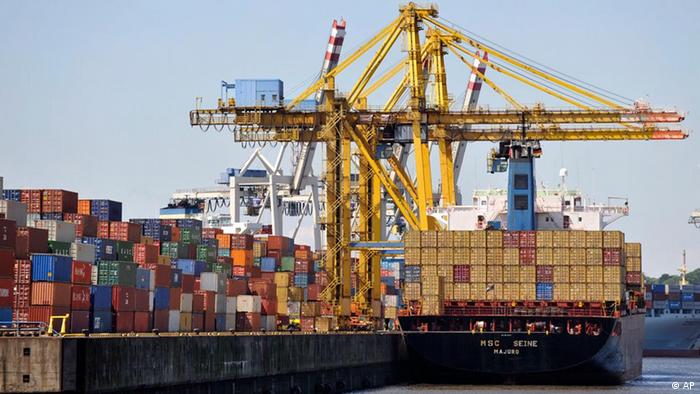
Germany, the EU's biggest and most powerful economy and the fourth-largest economy in the world, has experienced difficulties lately with the international recession and the EU debt crisis. However, recent data shows that the economy is changing--for the better. Although Germany's status as the largest exporter of goods in the world has changed because of the success of the US and China, the growth of Asian economies also benefits Germany. There is a very large market for German-manufactured goods in countries such as China. Anton Börner, the president of the German Foreign Trade Association, thinks that at the current economic rates, Asian and European markets for German goods will be roughly the same by about 2040. The Federal Statistics Office reports that exports are up 8.6%, and worth about 91.3 billion euros. In Europe, German exports have dropped six points, to only 59% percent in EU countries. The figures in Italy and Greece are even lower.
But the German economy will also benefit from services provided, says Börner. Engineering is currently big, with health and care services also projected to grow.
The loss of market for German goods in Europe reflects the current situation of the EU, which is unstable and unwilling to take large economic risks such as investing in a market for German goods. However, the global economic situation virtually nullifies the European economic weakness and disinterest in German goods. Rising standards of living and economic stability in Asian countries like China mean that Germany has a promising economic future if China continues to grow. This is a positive thing for Germany, and means that the powerful nation can continue its projects of growth and development, while helping out the EU in its crisis, without too much fear of losing its market for goods produced in Germany.

http://www.dw.de/dw/article/0,,15869427,00.html

Current Event 4/14/12

On June 3, Berlin's Brandenburg Airport will open, and with it will come new opportunities, luxuries and issues specific to the 21st century. The issues, in fact, have already begun. Tegel, the current and popular airport in Berlin, will close when Brandenburg Airport opens. Although Tegel has many issues, as it was designed in 1965 and convenience was the primary concern. The "drive to your gate" design and priority of speed and practicality has become obsolete, and Brandenburg Airport will be more a place to spend time and shop, while travelers wait to depart. Although many fliers say that Tegel is easy to reach and navigate, others recognize that the current situation is not sufficient for the number of planes or for modern concerns such as airplane hijacking and more advanced security. Although many Berliners are sad to see their trusted and convenient airport become obsolete, many recognize the need for new space and design.
Airports are an important part of a city's culture, and Tegel is no exception. Commercialism will be the byword of Brandenburg Airport, which also shows a change in the mindset of Berlin's economy. Niklas Maak, of the Frankfurter Allegemeine Zeitung, says that the creation of the new airport is also "one of a series of misguided attempts to make Berlin more like other capitals." This could cause a drop in visitors if Berlin loses its charming persona. However, others believe that increased flights could bolster the economy, which would be excellent for Germany. Although Brandenburg Airport is important to Germany's reconstruction, Tegel's place in the hearts of Berliners must not be overlooked. The acceptance of progress is promising for Germany's future and economy, but attachment to the old and charming is also clear evidence that Germany's history and culture remain a strong and positive part of the country's national identity.

http://www.nytimes.com/2012/04/04/world/europe/berlin-is-getting-a-new-airport-but-many-prefer-the-old.html?pagewanted=2&_r=1&ref=germany

7.4.12

Current Event 4/7/12

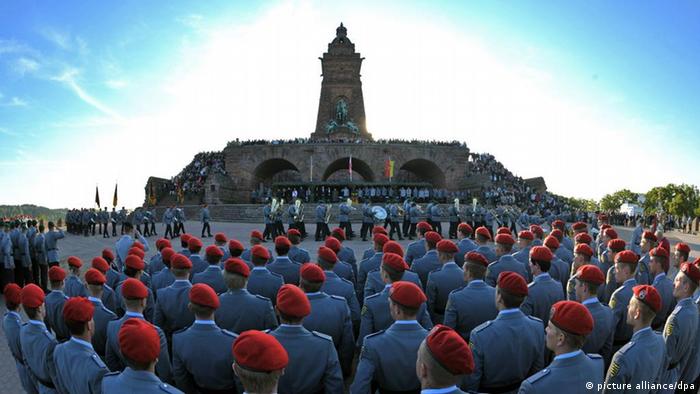
Thomas de Maiziere, the German defense minister, has suggested a Veterans' Day for Germany to honor past and present soldiers of the Republic. Germany's first international military mission since WWII was in the 1991 Gulf War, and since then troops have been active in locations such as Afghanistan and Kosovo. There have been German fatalities in these conflicts. De Maiziere says that the time is ripe for a reconsideration of Germany's policies regarding veterans.
This issue is controversial, though, for several reasons. Some politicians worry that honoring of veterans could be a poor choice considering Germany's previously bloody military past, while others in the Christian Democratic Party and the German army believe that a holiday honoring veterans would be a positive addition to the German calendar. Another obstacle is the choice of a date for the holiday; some believe that the date should be April 2, while others advocate for a holiday on May 22, the date the German army or Bundeswehr was founded.
The debate over who is a veteran is another problem in the formation of this holiday, and De Maiziere has conceded that the term needs firmer definition. Although Germany does not honor its soldiers fallen in WWI and WWII, many current soldiers returning from Afghanistan have adopted the term "veteran" for themselves. There is currently discussion among the Bundeswehr regarding the definition of a veteran.
The shift in Germany's opinion of its veterans and of the honoring of them is a noticeable change in the collective German military mindset. This could mean that German military actions will be done with more enthusiasm and national pride, or could become more widespread, but I think it is more likely that the German military will become a more integral and accepted part of German culture, and that veterans past and present will find a place in the hearts of many German citizens.

http://www.dw.de/dw/article/0,,15862988,00.html